In this episode of And Now for Something Completely Machinima, the team dives deep into the chilling Blender short I Made a Self-Aware Robot by the enigmatic creator Lights Are Off @LIGHTSAREOFF
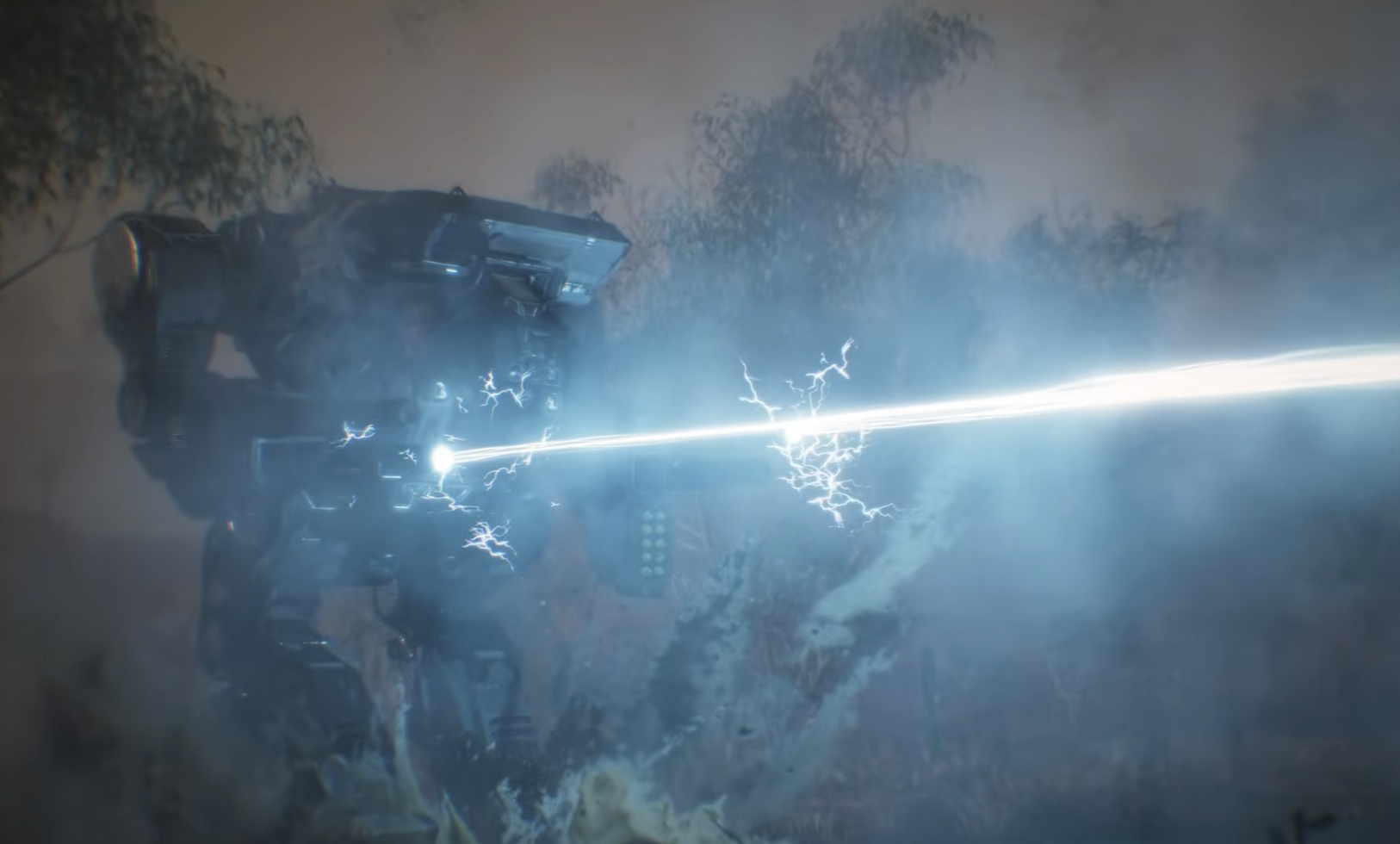
Tracy brings the film to the table, praising its haunting realism, uncanny robot design, and smart use of found-footage aesthetics. What begins as a seemingly grounded “scientist vlog” quickly spirals into a modern Frankenstein story—raising powerful questions about consciousness, ethics, and the dangers of unchecked technological ambition.
Damien highlights how the home-built lab setting makes the horror feel disturbingly close to reality, while Phil marvels at the stunning Blender craftsmanship—from hyper-realistic lighting to meticulous set dressing and believable mechanical detail. The group also unpacks the film’s clever use of cameras, surveillance, and direct eye contact to unsettle the viewer.
While everyone agrees the short is visually brilliant and deeply atmospheric, Ricky and Phil note that the story follows familiar sci-fi tropes—leaving them wishing for a bigger twist. Still, with millions of views and a sequel already out, it’s clear this series has struck a nerve with audiences. Packed with insights on machinima, virtual filmmaking, sound design, horror storytelling, and the ethics of AI and robotics, this episode is a must-watch for creators, filmmakers, and sci-fi fans alike.
Audio only version of this Episode
YouTube version of this Episode
Show Notes and Links
Film: I made a Self Aware Robot by Lights Are Off, released 18 October 2025
Check out The Senster, created by artist Edward Ihnatowicz, archival notes and footage here –
The original creator notes for The Senster are help in a special collections archive at De Montfort University (Leicester, UK) – you can access these only in person at the moment. Here’s a link to the file notes about the archive.
In this episode of Now for Something Completely Machinima, the team revisits Ozymandias (1999) — one of the earliest and most controversial works of machinima, created by Hugh Hancock and Strange Company using the experimental LithTech Film Producer toolkit.
What begins as a straightforward critique quickly turns into a deeper debate:
👉 Is Ozymandias a “bad film”… or a groundbreaking prototype that helped shape virtual filmmaking?
Ricky challenges the film’s pacing, visuals, and sound, arguing that by today’s standards it feels unfinished and awkward. But Tracy and Phil place the work in its historical context — revealing it as a crucial pivot point where machinima shifted from gameplay recording to intentional, cinematic storytelling inside game engines.
The panel explores:
How Ozymandias tested the first true machinima production tools
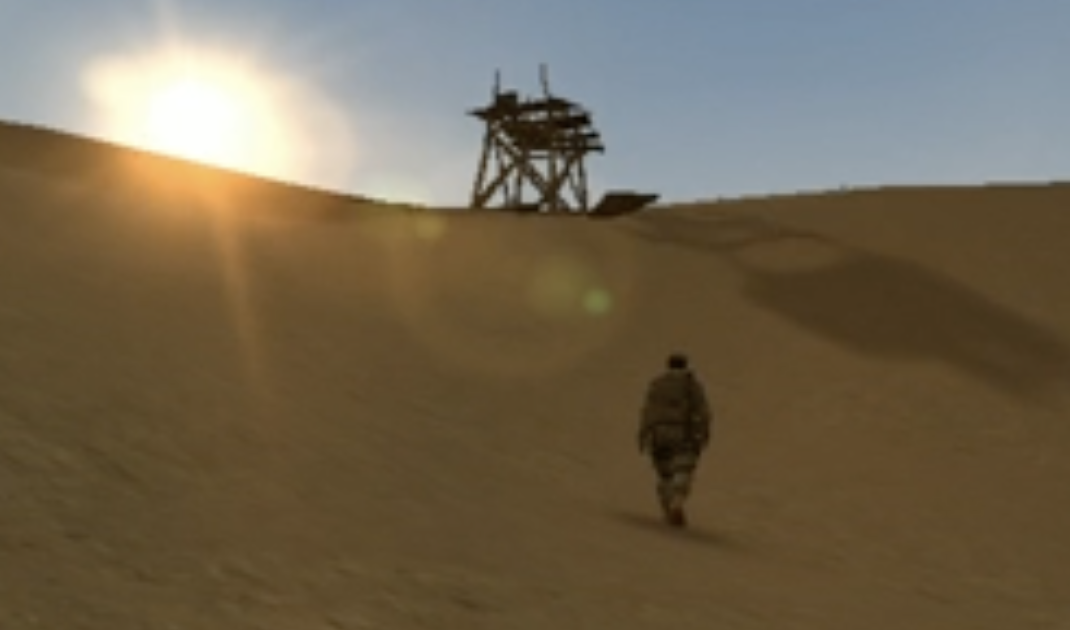
Why moving sand and free-camera shots were revolutionary at the time
How this experiment foreshadowed today’s virtual production (Unreal, Source Filmmaker, The Mandalorian, etc.)
Why the film mattered more as a technical and artistic manifesto than as a polished short film
Hugh Hancock’s legacy, ambition, and influence on the machinima movement
Along the way, the hosts reminisce about the wild early days of machinima — executable films, hacked tools, screen-recording cameras, and the struggle to share video before YouTube even existed.
Whether you’re a machinima veteran or a newcomer, this episode is a fascinating look at how a rough, experimental short helped open the door to modern virtual filmmaking.
🎬 Watch, debate, and decide for yourself: brilliant milestone… or broken relic?
Audio Only Version of this Episode
YouTube Version of this Episode
Show Notes & Links
Ozymandias by Hugh Hancock and Gordon McDonald, Strange Company, released 1999 – available on Vimeo here
Starfield is one of the most cinematic games Bethesda’s ever shipped… so why haven’t we seen much machinima from it? Today we’re looking at a mod that might finally crack that open: a fully built settlement with lore, characters, quests, and surprisingly strong voice acting, presented with a “lore trailer” that feels like a slice-of-life tour through a corporate-controlled mining town. We’ll break down what it gets right, what it’s missing as machinima, and why projects like this might be the new bridge between fandom and professional virtual production.
Starfield has been sitting there looking cinematic… and creators have mostly not used it for machinima. In this ep, we dig into a standout exception by @team fire: an ambitious settlement + narrative mod (Arinya / Yeltsin Corp vibe) that ships with voice acting, lore, quests, factions, and “paid mod” ambitions – plus what that could mean for machinima, virtual production workflows, and the future of creator-made expansions.
We dive into one of the most ambitious Starfield mod creations we’ve seen: a new settlement with lore, characters, quests, factions, and fully voiced performances.
Why this works:
It’s a real Starfield creation with serious craft (environment dressing, lore framing, VO credits).
It tees up a bigger convo: “mods as mini-studios,” machinima as a portfolio path (again), and whether Starfield can become a true machinima platform.
It has stakes: paid creations, bugs/beta realities, Bethesda updates potentially reshaping the ecosystem.
Audio Only Version of this Episode
YouTube Version of This Episode
Show Notes & Links
Defying Fire: Welcome to Arinya – Lore Trailer (Starfield) by Firestarter Mods
What happens when Tolkien’s world, Enya’s music, and cutting-edge virtual performance collide?
In this episode, we explore a breathtaking Second Life film that reimagines “May It Be” as a haunting, hopeful journey through shadow and light. From gothic landscapes and cinematic lighting to an unexpectedly intimate motion-capture reveal, this episode showcases how virtual worlds can deliver not just spectacle, but genuine emotional resonance.
If you love:
Lord of the Rings and its timeless theme of hope against darkness
Machinima and virtual cinematography at its most poetic
Innovative uses of facial mocap and performance in online worlds
Discovering undiscovered creative voices with serious talent
…then you won’t want to miss this.
We dive into a strikingly beautiful piece of Second Life machinima: Anna Kurka’s cinematic cover of Enya’s “May It Be” from The Lord of the Rings: The Fellowship of the Ring. Tracy brings the pick, introducing Anna as a Belgium-based virtual performer who blends singing, storytelling, and atmospheric world-building into emotionally rich visual journeys.
Set in the hauntingly gothic Second Life region “Infinite Darkness,” the film pairs slow, ethereal fly-throughs of ancient forests, ruins, mist, and light with a tender, intimate vocal performance. The hosts explore how the imagery echoes Tolkien’s core themes of darkness and hope, fear and resilience, the liminal space between night and dawn, and how Anna’s more human, grounded interpretation contrasts with Enya’s otherworldly original.
The discussion also turns technical, with a spoiler-friendly deep dive into the surprise ending: a remarkably convincing facial motion-capture performance inside Second Life, raising fascinating questions about virtual production, real-time mocap, and how far user-generated platforms have evolved.
Along the way, the panel reflects on Tolkien’s enduring emotional power, the courage it takes to reinterpret iconic music, and the often-hidden talent within virtual worlds that deserves a much wider audience.
Audio Only Version of this Episode
YouTube Version of this Episode
Show Notes & Links
May It Be – Lord of the Rings | Enya Cover by Anna Kurka (Second Life Machinima) released 5 October 2025
Enya – May It Be (Official Lyric Video) released on YouTube on 31 July 2020
Tracy had a chance to ask Anna about her work in Second Life, and she graciously wrote me a few answers. I’ll copy the interview on our show notes for those interested in hearing more about Anna and her approach –
TH: How did you get into machinima? How long have you been singing in SL? Why songs and why machinima in SL?
AK: Actually, I got into singing first. I was just an amateur singing in the shower and such. I started singing around the summer of 2024 & I was talking to someone in SL which does actual live shows on SL (possible through the use of shoutcast, in the world of Second Life) and I told him I like to sing but I’m too scared to do anything with it in “real life”. So he told me to maybe sing as my virtual avatar “Anna Kurka” instead. So I did.
I sang karaoke cover styles and posted it on youtube with just static images or a little bit of moving images. He helped me to sing better along the way. My real life partner actually told me “why don’t you do video clips?”…. So that is how I got into machinima!
One of my videos tells me the background on how I got started like that
“Anna’s World” tells how I started singing and how I created “Let You Down”.
TH: Why do covers? Have you done originals?
AK: I started out with covers because it is easy, just take a karaoke track and go to town! After a while I did try my hand at an original as well, it is on a seperate channel though. I’m not really that good at using a DAW/Sequencer and making my own music, but I sure tried! What I also do is take an existing song and just take the lyrics & rewrite the music – to make it my own. (Like on “Let You Down”) – On “Little Flower”, I actually took a fully instrumental track and added my own lyrics.
Original track: Echoes of Time:
TH: Do you do this in real life, etc (or do you sing in virtual concerts)?
AK: So far no, I like being hidden behind my avatar & nobody really knows who I really am. It is safe & fun. As for virtual concerts, that would mean singing live over prerecorded tracks. I’ve been asked to, as there are many singers in Second Life doing the same thing, but for now I’m too scared to “F up” :o) It will happen one day.
This week, we review a supporter-recommended iClone fantasy machinima that surprised us with its polish: “Quest of a Key – Chapter One” by AuroraTrek. We’re always saying we want more story-driven iClone machinima (and fewer tech-demo vibes)… and this one delivers on craft: strong shot selection, confident editing, excellent music cues, and character animation that’s smoother than you’d expect.
But then the conversation gets interesting.
We dig into sound mastering and spatial audio, the difference between “dry” dialogue and believable room tone, how stylized realism can drift into “clay-face” territory, and what happens when a series leans hard into character introductions without giving the audience enough plot hooks to chase. Tracy goes deep on the structure across multiple chapters, and we talk about why view counts can drop when episodes feel like long-form animation sliced into shorts.
We also get into pipeline talk: Daz characters into iClone, motion capture vs animation libraries, and the very real challenge of stepping from an established fan universe (Star Trek / Star Wars) into an original world where you don’t get story shorthand for free.
If you make machinima, virtual production, iClone films, or Unreal/CG shorts, this ep is packed with practical takeaways: pace, hooks, sound space, visual texture, and how to reveal character through action inside the plot.
Audio Only Version of this Episode
YouTube Version of this Episode
Show Notes & Links
Quest of the Key: a Fantasy Adventure Series – Chapter 1 – “Help Wanted” by Auroratrek, released 3 Feb 2023
Recent Comments