World of Warcraft

S6 E210 WoW: Among Fables and Men (Jan 2026)
Tracy Harwood Podcast Episodes January 22, 2026 Leave a reply

We begin with a heartfelt tribute to the late Frank Fox — filmmaker, musician, and beloved member of the machinima community. From his classic MovieStorm film Morning Run Amok to his live music performances as “Frank Leonatra,” we reflect on his creativity, generosity, and the lasting impact he had on virtual filmmaking and the people who loved him.

Then we dive deep into one of the most visually unique and emotionally powerful machinima ever made:

🎥 “Among Fables and Men” (2007) by Tobias “Dopefish” Lundmark.

Created in World of Warcraft using an experimental motion-comic style, this five-minute film is a masterclass in:

  • Visual storytelling without dialogue
  • Music-driven narrative
  • Surreal atmosphere and symbolic design
  • Why bold artistic style can outlive “realistic” graphics

We explore its production history, its Japanese folklore and graphic-novel influences, its innovative camera and compositing techniques, and why it still feels fresh nearly 20 years later.

If you love:
✨ Machinima history

🎮 Game-based filmmaking

🎼 Cinematic sound design
🎨 Experimental visual style
📽️ Virtual production as true art

…this episode is for you.

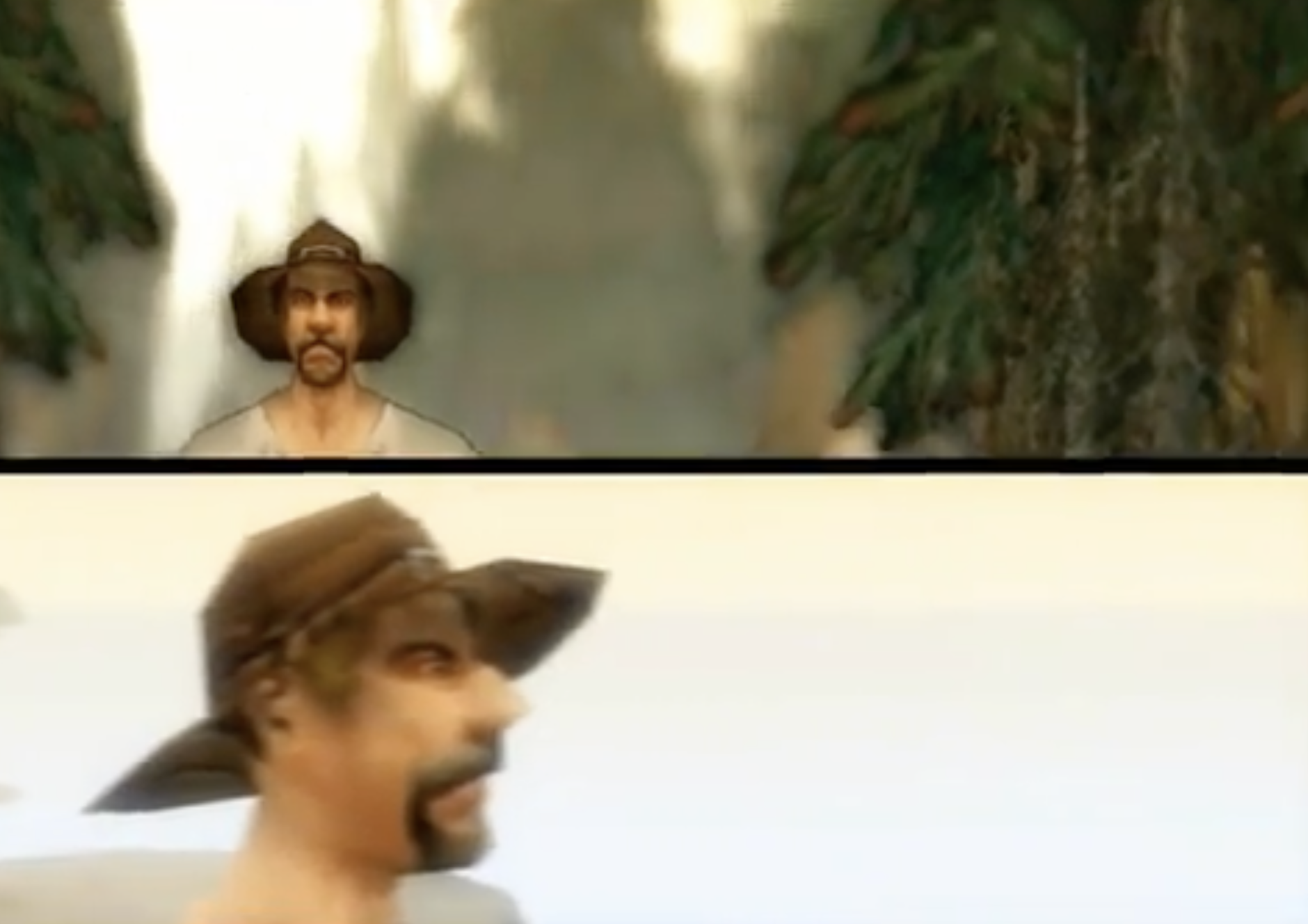
In the history of machinima, Among Fables and Men stands out as a quiet but profound turning point, not because it pushed technical realism, but because it expanded the very idea of what machinima could be. At a time when most creators were striving to replicate the look and grammar of live-action cinema – dialogue, shot-reverse-shot editing, lip-sync, and narrative realism – Tobias “Dopefish” Lundmark chose a radically different path. He treated the game engine not as a virtual film set, but as raw visual material, closer to animation cels, comic panels, and theatrical tableaux than to conventional cinematography.

The film’s motion-comic style, its use of cut-out figures moving through layered 3D space, its panel-like framing, and its subtle depth illusions created a hybrid language that sat somewhere between graphic novels, animation, and experimental cinema. By refusing to anchor the story in spoken dialogue or narration, Lundmark allowed music, rhythm, and sound design to become the primary storytelling forces. Meaning emerges through atmosphere and emotional progression rather than through explicit plot mechanics, placing the work in the tradition of visual music and art film rather than scripted drama.

This stylization also gave the film a timeless quality. While many machinima from the mid-2000s now appear dated as game engines evolved, Among Fables and Men still feels fresh because it is not trying to simulate reality. Its abstraction frees it from technological obsolescence and instead roots it in artistic intention. The world of Warcraft becomes a symbolic landscape rather than a literal one, a dreamspace shaped by folklore, surrealism, and the logic of music rather than by gameplay.

Lundmark’s innovation lies in this shift of perspective. He did not ask how to make a game look more like a movie; he asked what kinds of cinema could only exist inside a game engine. By combining modded camera tools, compositing, and graphic design principles, he constructed a personal visual grammar that was neither traditional animation nor traditional machinima. The intense, constraint-driven production process, created in a matter of days, without final voice performances, pushed the film toward suggestion, mood, and symbolic imagery, turning limitation into aesthetic identity.

In doing so, Tobias Lundmark helped demonstrate that machinima could be more than recorded performance or digital theater. It could be poetic, abstract, musically structured, and formally experimental. Among Fables and Men showed that virtual worlds could host not only stories, but also atmosphere, metaphor, and visual philosophy, opening the door for machinima to be understood not just as a technique, but as a legitimate and distinctive cinematic art form.

Audio only version of this episode


YouTube version of this episode

Show Notes & Links

Among Fables and Men by Tobias ‘Dopefish’ Lundmark, released originally in 2007 and was then uploaded to his YT channel 15 years ago, on 8 October 2010

Link to the Archive version of the film is here.

Newgrounds flash graphic novel series ‘Thamesis’ link here.

Knytt Stories, free platformer game released in 2007, link here.

and a run through of the game, which includes some of the fantastic music –

The Snow Witch, made with The Sims, and released just the year before Among Fables and Men won Best Film at the European Machinima Film Festival in 2007 and was reviewed on one of our first podcast episodes, link here.

Malu05 or Mads Lund, was the developer of the WoW machinima tool, link to his channel here.

Peter Greenaway’s controversial comments –

And finally, what’s the difference between Noh and Kabuki Theatre? Check this out!
S6 E203 genAI: Arido Taurajo (Nov 2025)

Tracy Harwood Podcast Episodes November 27, 2025 Leave a reply

In this episode of Completely Machinima, hosts Phil Rice, Tracy Harwood, and Damien Valentine explore the stunning AI-powered operatic machinima “Arido Taurajo” — a groundbreaking short film created by Chantal Harvey (aka Mamachinima) in collaboration with digital artist James Morgan, AI composer Roboccini and soprano/AI researcher Maya Ackerman, among others.

🎮 About the Film:
Set in the World of Warcraft universe, Arido Taurajo tells the story of Dahlia, a female warrior torn between family life and adventure. The film combines AI-generated music with human performance, blending digital game visuals and classical opera in a visually rich and emotionally resonant experience.

💡 Discussion Highlights:

The role of AI in creative filmmaking and music generation.
How Roboccini, trained on Puccini operas, composed the film’s aria.
Chantal Harvey’s filmmaking process inside World of Warcraft.
Insights into AI ethics, creative authorship, and collaboration.
The film’s connection to the EU COST Action Grassroots of Digital Europe (GRADE) project, celebrating women and minorities in creative technology.

✨ Whether you’re into AI art, machinima, digital filmmaking, or World of Warcraft, this episode dives deep into the fusion of technology, music, and storytelling.


YouTube Version of This Episode

Show Notes & Links

Film, by Chantal Harvey –

ALYSIA http://tryalysia.com/ stands for Automated LYrical SongwrIting Application

An interesting recent Video interview with Maya Ackerman on her predictions for the future of creative AI

An interview with James and Maya about the Arido project, here

You can find the ALYSIA app here https://www.withalysia.com/

Phil’s Making Dr Krispia documentary –

S5 E175 The Golden Age of WOW (Mar 2025)

Tracy Harwood Podcast Episodes March 27, 2025 Leave a reply

It’s lovely to hear a fellow machinima fan discuss their passion for the creative works that have inspired them. This week’s ep is a documentary by one such person, ⁨@Angelikatosh⁩, who reminisces about the ‘golden age’ of classic World of Warcraft films. We highlight a few films from our own and possibly slightly older archives that she’s not managed to cover too.


YouTube Version of This Episode

Show Notes & Links

Golden Age of WOW Machinima by Angelikatosh released on 14 Feb 2025

Tristan Pope’s channel, link here

Olibith’s channel, link here

Our review: The Internet is For Porn

Our review: Little White Poney Inn by Olibith

Netflix trailer for The Remarkable Life of Ibelin

and a Hollywood Reporter review here

Machiniplex showcase page on Vimeo, link here

S5 E160 Machinima News Omnibus (Dec 2024)

Tracy Harwood Podcast Episodes December 12, 2024 Leave a reply

Our monthly news update this month covers more genAI matters, game-related items and WoWness in the form of a 2 hour + stunning orchestral performance celebrating 20 years of musical history. Check out the news and our discussion, and do leave comments too!


YouTube Version of This Episode

Show Notes & Links

A new AI-focussed filmmaking studio has launched, called Asteria.  Its argument is that AI can change the way indies make and distribute content, providing new opportunities, and presumably new types of content – its very much the same point we made a few months back about mAIchinima. Link here.

The Silent Hill 2 Remake with a mod that turns it into a VR game, made by Praydog that gives the game more of a first person perspective.  Demo video here –

Philip Rosedale has rejoined the team at Linden Labs’ Second Life as the CTO – roundtable discussion with the community in November here –

There’s also a great interview that James Wagner Au has done in two parts on his New World Notes blog here

Remarkable Life of Ibelin trailer here (feature image) –

World of Warcraft 20 years of music orchestral concert, video of performance here –

Steam Launcher update now with recording tools for machinimators. News item here.

Dragon Age: The Veilguard official launch trailer –

Half Life 2 RTX, tribute video promo here –

S4 E149 Special: Season Finale 2024

Tracy Harwood Podcast Episodes September 27, 2024 1 Comment

In this ep, we reflect on the key trends in #machinima we’ve observed during Season 4 of the Completely Machinima podcast. We’d love to hear your thoughts on the year too, so do add comments below.

During the past year, we have reviewed over 22 hours of content, and presented detailed analysis of over 50 films on this channel. As vets of the original community practices (that’s pre YouTube and the M.com/Inc days), one of the great pleasures we take in this podcast is that we get to look at machinima and virtual production across the breadth of genres and engines, by creators from anywhere in the world, and reflect on where its come from, how its evolved and is developing.

This year, we have seen amazing quality films made in popular games such as Half-Life, World of Warcraft, Elden Ring, Star Citizen, Warhammer 40K and Team Fortress 2; have had the pleasure of exploring work made in entirely new games, like BeamNG and Deep Rock Galactic; and others made using engines in their base form such as Unreal, iClone and Source. We’ve also started to see #genAIs become integrated into processes and works. What a year for creatives and creativity!

Our main observation is that we have noted a resurgence of interest in machinima as a terms for the creative form, and we feel creators are at long last focussing on creative practices rather than their channel return. Of course its great when these things collide but it was never what machinima was about originally: it was the passion for great storytelling, using novel processes to achieve a desired outcome and to share that with a community of equally passionate others. Other observations are why we are not seeing as many traditional short stories as we used to…

We hope you enjoy this ep as much as we have making it.


YouTube Version of This Episode

Show Notes & Links

Key trends observed –

  • The highest quality of machinima we’ve ever seen
  • Unreal, by comparison, doesn’t actually really compare!
  • Experimentation
  • Meme’s
  • Distribution channels
  • Generative AIs

Our reviews, mentioned during discussion in order –

And, check out the bonus episode of our very own RickyAI –